LogoLogoGaN Servo
Start inquiry
LogoLogoGaN Servo
WhatsApp
LogoLogoGaN Servo

Micro GaN servo PCBA and robotic joint servo OEM manufacturing from prototype to mass production.

Inquiry Email

[email protected]

Email app

Include target torque/speed, quantity, and delivery location.

Instant Chat

+8618857971991

Chat on WhatsApp

Direct response from our engineering team.

Products
  • Micro GaN Servo PCBA
  • Robotic Joint Servo OEM
  • Low Voltage GaN Module
  • Driver-Encoder Stack
  • 48 V Bare-Board Driver
  • Ring-Shaped Joint PCBA
  • Micro GaN Surgical Drive
  • High-Frequency UAV GaN ESC
Solutions
  • Humanoid Micro Actuators
  • Drone and eVTOL Servo Control
  • Medical Robotic Arms
  • Precision Grippers
OEM Capabilities
  • OEM Manufacturing
  • SMT PCBA Assembly
  • Firmware and Control Loop
  • Robot Joint BOM Turnkey
  • Prototype to Mass Production
Resources
  • Blog
  • About
  • Contact / RFQ
  • Quality Facilities
  • STEP Envelope Guide
  • Privacy Policy
  • Cookie Policy
  • Terms of Service
© 2026 GaN Servo. All Rights Reserved.|Backed by Linkup Ai Co., Ltd. Manufacturing delivered by the Advanced Manufacturing Division of Linkup Precision.
← Back to Products48 V Bare-Board Driver

Build a 48 V actuator drive around your housing, not around a catalog enclosure

A board-level GaN servo driver path for OEM teams that already own the motor, enclosure, and system controller, but need a compact 36 V to 60 V power and control board that can survive real thermal, encoder, and production-test constraints.

Target Buyer:For hardware teams replacing bulky enclosed drives with a custom low-voltage board that can be integrated directly into the actuator.
Request engineering reviewRequest STEP envelope guide
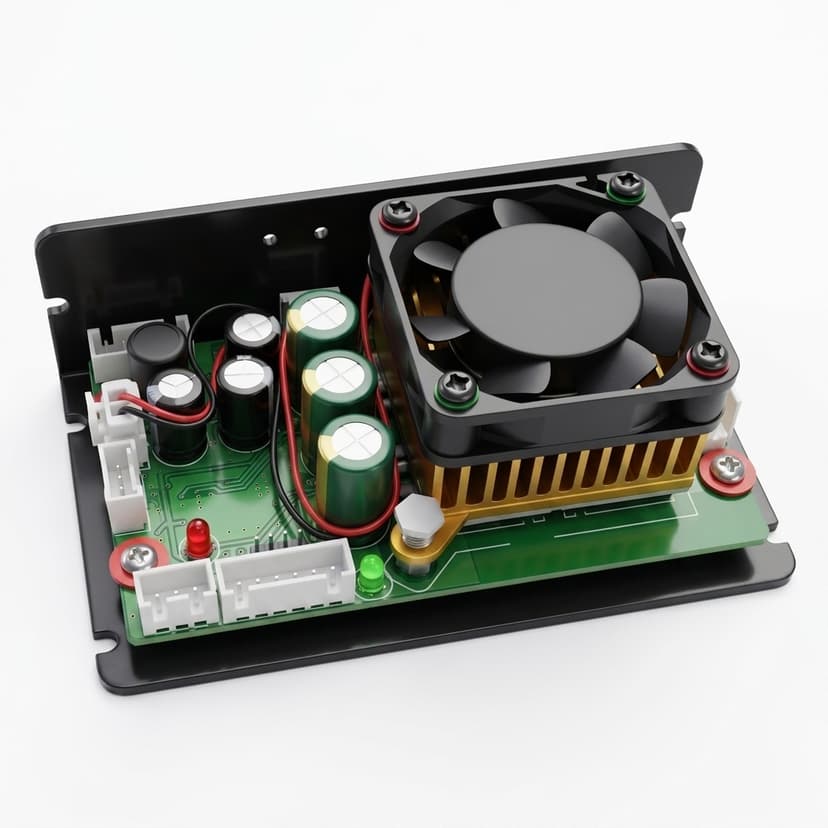
Bare-board GaN servo driver for 48 V class robotics programs
Buyer Problem

Why 48 V bare-board programs stall

The first prototype can spin a motor while still being unready for a sealed actuator, a vibration environment, or repeatable production. This page focuses the RFQ on the decisions that decide whether a bare board can become a dependable actuator subsystem.

Catalog drives are mechanically oversized

Industrial servo packaging wastes volume inside humanoid joints, mobile actuators, and portable medical devices.

Thermal claims can detach from the housing

A bench result does not predict a sealed joint unless duty cycle, heat-spreader contact, enclosure, and airflow assumptions are recorded.

Encoder noise becomes a late-stage failure

High-frequency switching, grounding, and cable routing need to be reviewed before the board outline is frozen.
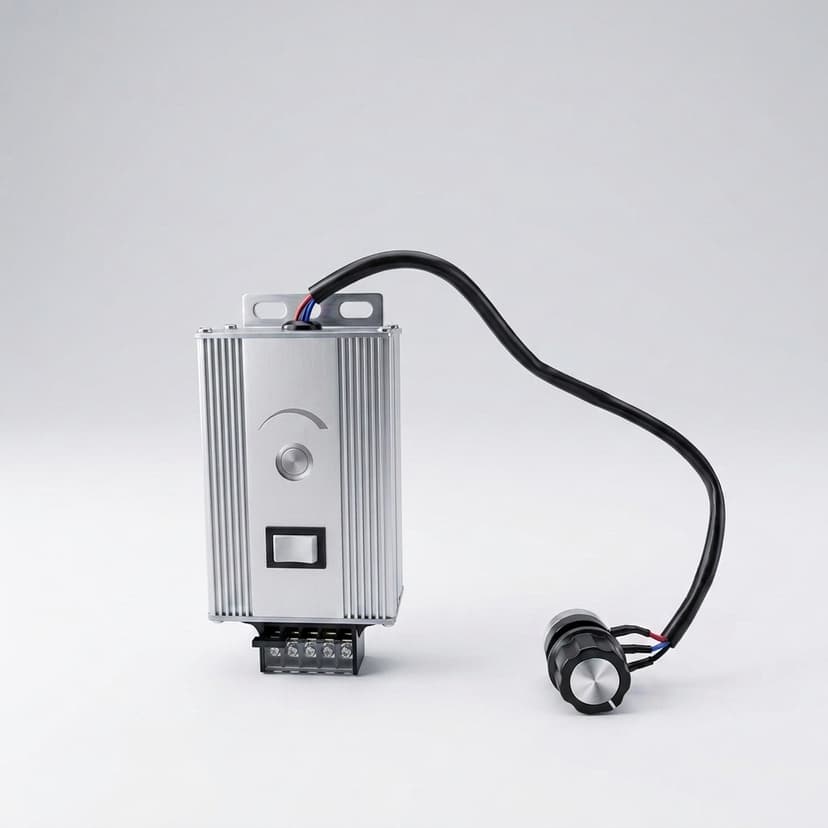
Qualification Snapshot

Fast buyer fit check

Voltage class
36 V / 48 V / 60 V DC programs
Delivery format
Bare PCBA or semi-integrated board
Primary risks
Thermal path, encoder noise, current margin
Best stage
EVT, DVT, pilot build, controlled redesign
Solution Overview

Turn 48 V Bare-Board GaN Servo Driver from a possible board into a quoteable OEM subsystem

Each value prop below is paired with the evidence a serious buyer should scope before prototype, pilot, or repeat production.

Power stage planned for the actuator envelope

Gate drive, shunt placement, copper area, connector keep-outs, and mounting datum are reviewed against your actual board volume.

Evidence to scope: Scope Gerber/BOM review, current target, thermal interface, and board outline before quote lock.

Thermal proof tied to operating condition

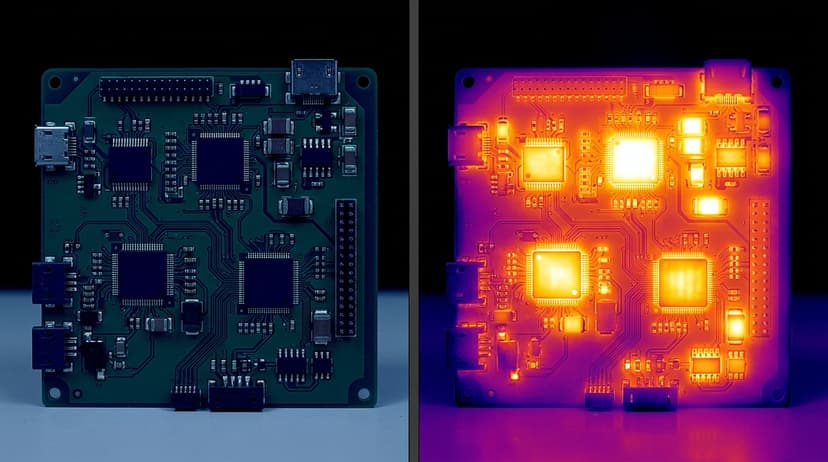
Prototype thermal evidence is framed around voltage, current, switching setup, duty cycle, enclosure contact, and cooling condition.

Evidence to scope: Ask for thermal-image notes and test assumptions in the prototype or pilot release package.

Signal integrity reviewed before pilot

Encoder, Hall, bus, and firmware hooks are treated as integration risks, not afterthoughts after the power stage works.

Evidence to scope: Include encoder type, cable path, grounding assumptions, and load-test method in the first RFQ email.

Production test hooks defined early

Fixture access, firmware flash, current-limit check, bus communication, and calibration expectations are defined before repeat orders.

Evidence to scope: Request an end-of-line test checklist and controlled sample release notes.

Product Visuals

Relevant board and actuator references

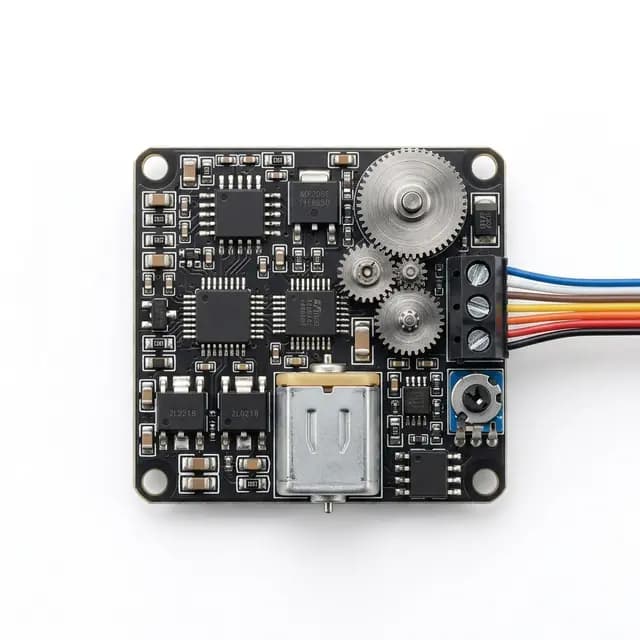
GaN half-bridge power stage for compact servo drive validation
Board-level servo driver prepared for custom actuator integration
Engineering Context

Proof assets buyers should ask to review

Thermal validation reference for compact servo electronics
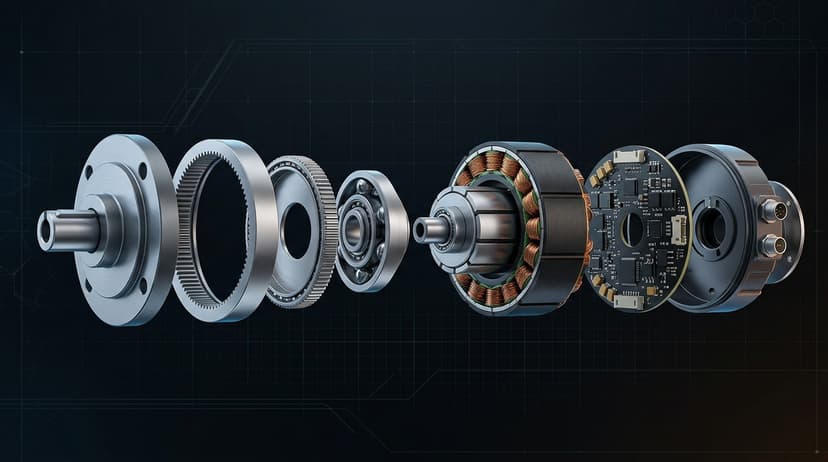
CAD envelope review reference for board-level actuator integration
Decision Matrix

Questions that decide whether this product should move to RFQ

Buyer questionEngineering answerEvidence to scope
Will it fit our actuator package?Freeze board outline, height limit, connector keep-outs, mounting datum, and heat-spreader contact early.STEP envelope, 2D drawing, connector map, heat path note
Can it survive continuous current?Separate short peak current from continuous thermal operation and quote around the real duty cycle.Thermal image data, current profile, enclosure condition
Will switching noise disturb feedback?Review grounding, filtering, encoder cable routing, and validation under full-current load.Encoder interface note, load-test checklist, bus test result
Can the prototype become a repeatable order?Lock no-substitution parts, approved alternates, fixture access, firmware revision, and outgoing records.BOM lock, AVL, firmware revision, EOL test checklist
How It Works

From first files to a pilot-ready release package

Step 01

Envelope and heat-path review

Map the board volume, connector keep-outs, mounting points, and available heat sink surface.

Output: Quoteable board-envelope baseline

Step 02

Electrical baseline

Confirm voltage range, phase current, motor constants, sensing method, bus protocol, and firmware ownership.

Output: Electrical and firmware scope

Step 03

Prototype validation

Run functional checks, current-limit review, encoder stability checks, and thermal sampling under stated conditions.

Output: Prototype evidence pack

Step 04

Pilot release

Lock BOM controls, fixture requirements, inspection records, firmware revision, labels, and packaging notes.

Output: Pilot build release package

Evidence Package

Proof to scope before purchase orders

Electrical baseline

Voltage/current target, motor parameters, bus, sensing, and firmware boundary.

Thermal sample note

Thermal image or temperature data with duty cycle and cooling assumptions.

EOL test checklist

Firmware flash, bus communication, current limit, encoder check, and acceptance criteria.

BOM control

No-substitution items, approved alternates, revision, and sourcing risk notes.

Fit Check

When this page is the right path

Best for

  • OEMs with a defined actuator housing and a need for compact 48 V class electronics
  • Humanoid, mobile robot, lab automation, and medical-adjacent mechatronics teams
  • Programs that can share motor data, envelope files, and pilot acceptance criteria

Not for

  • Buyers expecting a finished catalog enclosed servo drive with no integration work
  • Teams unable to share voltage, current, motor, or mechanical envelope data

Applications this page should qualify

  • 48 V humanoid joint modules
  • Compact mobile robot actuators
  • Battery-powered medical and laboratory mechatronics

RFQ inputs that make the first answer useful

  1. Nominal voltage, transient range, continuous current, peak current, and duty cycle
  2. Motor phase resistance, inductance, back-EMF constant, and pole-pair count
  3. Board outline, height limit, connector keep-outs, and available heat path
  4. Control protocol, firmware ownership, calibration commands, and acceptance test method

Risk Controls

  • Bare-board thermal data does not match the final joint housing: Validate thermal image data against the real heat path, enclosure contact, current profile, and duty cycle.
  • Switching noise corrupts encoder feedback: Review grounding, cable routing, filtering, and encoder stability under full-current load before pilot release.
Next Step

Ready for a quoteable 48 V board review?

Send motor data, board envelope, connector constraints, duty cycle, and expected pilot quantity. The first useful answer is whether the board should stay bare, become semi-integrated, or move into a module format.

Request engineering reviewRequest STEP envelope guide

Buyer FAQ

Is this a finished enclosed servo drive?

No. The focus is a bare-board or semi-integrated GaN servo driver for OEM actuator integration.

Can the board be adapted to our connector and mounting pattern?

Yes. Connector placement, mounting datum, board outline, and thermal interface are normally reviewed during DFM.

Related Resources

  • Low Voltage GaN Servo Module
  • STEP Envelope and Integration Guide
  • Contact / RFQ

Inquiry Email

[email protected]

Email app

Include target torque/speed, quantity, and delivery location.

Instant Chat

+8618857971991

Chat on WhatsApp

Direct response from our engineering team.