

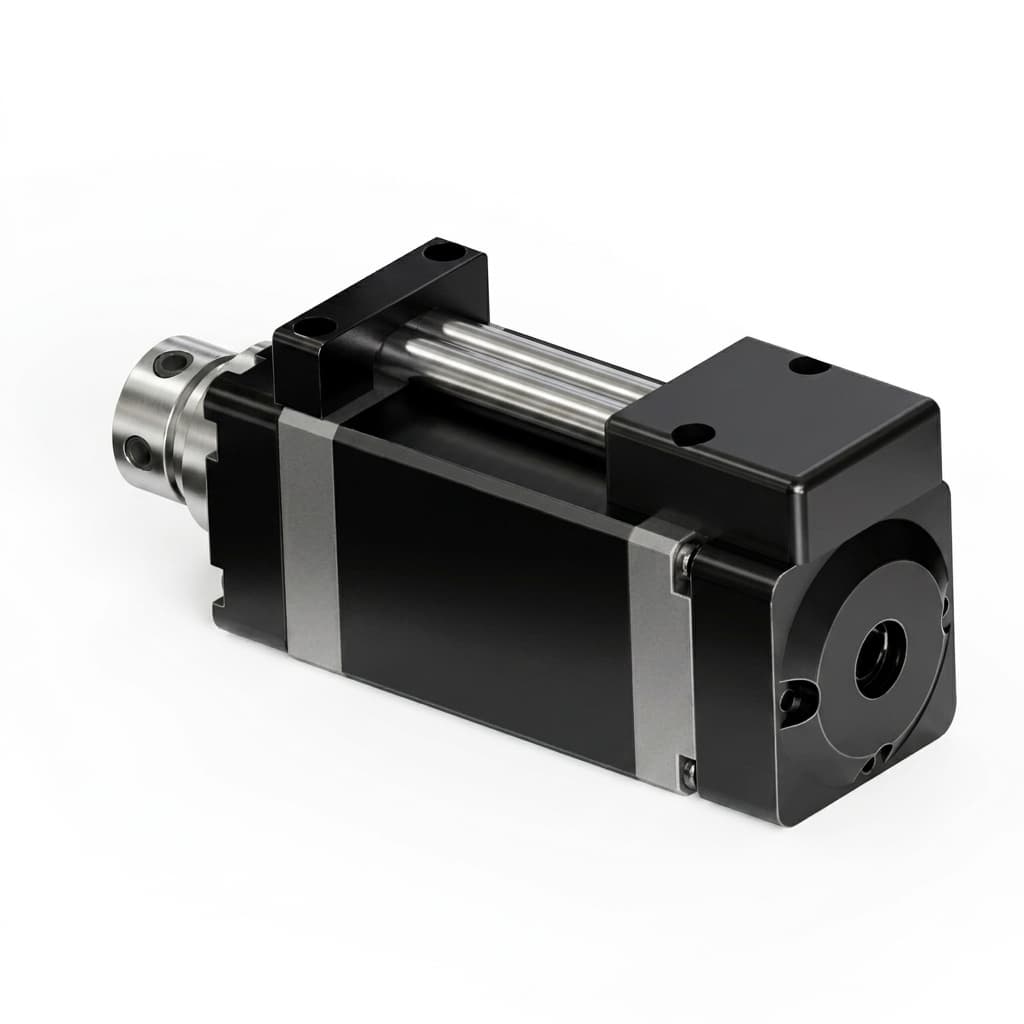
GaN vs. Silicon Servo Drives in Mobile Robotics: A Procurement Cost-Benefit Analysis
Compare GaN vs. silicon servo drives for mobile robots. Review TCO, battery, thermal, payload, supplier checks, and request a GAN Servo evaluation kit.
For procurement teams and hardware architects designing the next generation of Automated Guided Vehicles (AGVs), Autonomous Mobile Robots (AMRs), and humanoid robotic platforms, the selection of joint actuators and motor drives represents a critical supply chain and engineering decision. Historically, silicon (Si) MOSFET-based servo drives have dominated the bill of materials (BOM). However, the aggressive commercialization of Gallium Nitride (GaN) power electronics is forcing purchasing departments to recalculate their Total Cost of Ownership (TCO).
While a direct component-level price comparison often shows GaN as a premium option, looking exclusively at the unit cost of the PCBA (Printed Circuit Board Assembly) is a critical procurement error. The true value of GaN servo drives lies in system-level cost reductions—specifically in battery pack sizing, payload capacity optimization, and the elimination of complex thermal management hardware.
Executive Summary (TL;DR)
- Evaluating GaN versus Silicon requires a system-level TCO approach, not just a BOM-to-BOM comparison.
- GaN drives significantly reduce battery requirements by operating at higher efficiencies with less thermal loss.
- Procurement teams can offset the GaN price premium by eliminating external heatsinks and expanding the robot's payload capacity.
- Supplier vetting for GaN requires specific scrutiny of thermal layout capabilities and high-frequency firmware maturity.
Procurement model scope, updated July 19, 2026: This analysis is intended for global OEM teams comparing low-voltage, battery-powered servo drives for AMRs, AGVs, humanoid joints, compact robotic arms, UAV gimbals, and medical mechatronics. It does not cover line-voltage factory servo cabinets, very large industrial AC servos, or disposable low-cost consumer motion products. Cost and efficiency bands below are screening assumptions for RFQ planning; validate them with your own motor winding inductance, duty cycle, ambient temperature, battery chemistry, EMI limits, and annual volume before locking a supplier award.
In this comprehensive guide, we will analyze the engineering boundaries, procurement strategies, and financial implications of adopting GaN servo drives over traditional silicon alternatives for battery-powered robotics.
1. The Core Technological Difference: Why Does it Matter to Procurement?
Before diving into the financial models, buyers must understand what they are paying for. Silicon MOSFETs have physical limitations regarding how fast they can switch electrical currents without generating excessive heat (switching losses).
Gallium Nitride is a "wide-bandgap" semiconductor. This means electrons can move through it much faster and with significantly less resistance than through silicon. In the context of a micro servo drive controlling a robotic joint, GaN allows the inverter to switch at frequencies of 100 kHz or higher (compared to silicon's typical 20 kHz to 40 kHz) while generating a fraction of the heat.
For a procurement manager, "high-frequency switching" translates to three highly bankable benefits:
- Smaller Passive Components: High frequencies allow engineers to use much smaller capacitors, drastically reducing the physical footprint of the drive.
- Zero Need for External Inductors: When driving coreless or slotless motors with very low inductance, silicon drives require bulky external inductor chokes to prevent the motor from burning out. GaN eliminates this expensive, heavy add-on.
- Higher Motor Efficiency: Smoother current delivery means less energy is wasted as heat inside the motor windings, extending battery life.
2. System-Level Economics: The GaN TCO Diagram
To visualize how GaN affects the entire robotic architecture, consider the following value chain. A more expensive drive leads to cascading savings down the line.
3. Structural Comparison: GaN vs. Silicon (TCO Perspective)
The following table breaks down the procurement realities when comparing traditional silicon drives with next-generation GaN drives across six critical dimensions.
| Procurement Category | Traditional Silicon (Si) Drive | Gallium Nitride (GaN) Drive | Financial Impact / Decision Driver |
|---|---|---|---|
| Initial PCBA Cost | Lower (Commodity pricing) | Higher (Premium materials) | GaN carries a 15-30% premium at the PCBA level. |
| Thermal Hardware Requirements | Requires aluminum heatsinks, thermal paste, fans | Often runs bare-board or integrated directly into chassis | Eliminating heatsinks saves BOM line items and labor assembly time. |
| Battery Sizing & Cell Count | Baseline efficiency limits runtime | 5-15% higher system efficiency | AMRs can reduce total lithium-ion cell count while maintaining identical runtime. |
| Robot Payload Capacity | Heavier joints reduce usable payload | Ultra-compact, low-weight joints | Every gram saved in the arm increases the marketable lifting payload of the robot. |
| Supply Chain Complexity | Mature, highly commoditized, multiple sources | Maturing rapidly, requires specialized vendors | Silicon is easy to source; GaN requires vetting suppliers with specific high-frequency expertise. |
| Maintenance & Longevity | High heat cycling degrades components | Lower thermal stress extends lifespan | Reduced warranty claims and field replacement costs for GaN fleets. |
4. Deep Dive: Battery and Payload Economics
For logistics robots, warehouse AMRs, and bipedal humanoids, weight is the absolute enemy of profitability. The heavier the robot, the more energy it spends simply moving its own mass.
When procurement teams specify GaN servo drives, they trigger a positive weight-reduction spiral:
- The GaN drive is physically smaller and lighter than the Silicon equivalent.
- The GaN drive requires no heavy aluminum heatsinks.
- Because the GaN drive operates the motor more efficiently (with significantly less current ripple), the system draws less average power.
- Because the system draws less power, the engineering team can specify a smaller, lighter, and cheaper lithium-ion battery pack.
- The combined weight reduction of the drive, heatsink, and battery means the robot can carry heavier commercial payloads, increasing its value proposition to the end customer.
In many robotic configurations, saving just 500 grams per joint on a 6-axis robotic arm translates to 3 kilograms of saved dead weight. The resulting battery pack downsizing alone often completely absorbs the higher initial unit cost of the GaN drives.
5. Thermal Management Assembly Costs
A frequently overlooked aspect of BOM analysis is the cost of manual assembly and mechanical hardware. Traditional silicon servo drives pushing 10A to 20A of continuous current will generate enough heat to require active mitigation.
This means procurement must source:
- Extruded or CNC-machined aluminum heatsinks.
- Thermal interface pads or thermal pastes.
- In some cases, micro cooling fans and associated wiring.
Furthermore, factory floor workers must manually assemble these components, increasing labor costs and introducing points of failure (e.g., uneven thermal paste application causing field burnouts). GaN's inherently low switching losses mean that in many micro-actuator applications, the drive can be bolted directly into the aluminum robot housing without a dedicated internal heatsink, utilizing the robot's existing chassis for ambient thermal dissipation.
6. Supplier Validation & Procurement Checklist
Because GaN is a newer technology in the micro-servo space, procurement teams cannot rely on generic motor drive suppliers. Successfully sourcing GaN drives requires vetting vendors for specific competencies. Use this 10-point checklist when auditing potential suppliers for GaN integration.
Sourcing & Architecture Checks
- 1. GaN Partner Ecosystem: Does the supplier use reputable GaN power stages (e.g., EPC, Texas Instruments, Navitas) rather than unverified generic components?
- 2. High-Frequency Layout Experience: Can the supplier demonstrate a track record of designing multi-layer PCBs optimized for high-frequency (100kHz+) switching without EMI issues?
- 3. Firmware Maturity: Does the supplier provide proprietary firmware capable of managing nanosecond dead-times, which are strictly required for GaN to prevent short circuits?
- 4. Coreless Motor Compatibility: If your robot uses coreless/ironless motors, can the supplier prove their GaN drive operates without external inductor chokes?
Commercial & Supply Chain Checks
- 5. Lead Times: What are the standard lead times for the specific GaN ICs used on the board? (GaN supply chains are currently stable but require confirmation).
- 6. Customization Capabilities: Does the supplier offer form-factor customization to integrate the drive directly into your specific robotic joint housing?
- 7. TCO Modeling: Can the supplier provide case studies or engineering data proving battery efficiency gains for your specific motor type?
- 8. Certifications: Does the assembled drive pass standard CE/FCC EMI (Electromagnetic Interference) testing, given the high-frequency switching nature of GaN?
- 9. Thermal Data: Will the supplier provide comprehensive thermal imaging or derating curves showing continuous current limits at various ambient temperatures without a heatsink?
- 10. Long-Term Support (LTS): Is there a guaranteed component availability roadmap (5+ years) for the chosen GaN architecture?
7. Application Boundaries: When NOT to Buy GaN
Despite the massive advantages for mobile, battery-powered robotics, GaN is not a universal solution for every procurement requirement. It is crucial to know your application boundaries to avoid overspending.
You should stick with traditional Silicon if:
- You are building massive, stationary industrial machinery (like CNC mills or heavy automotive assembly robots) where weight and battery life are irrelevant because the system plugs directly into the 480V factory grid.
- You are using very large, high-inductance, high-inertia standard industrial AC servo motors where the high-frequency switching of GaN offers diminishing returns.
- You are designing an ultra-low-cost disposable consumer toy where the primary mandate is the absolute lowest possible component cost, regardless of efficiency.
GaN is strictly for high-performance, compact, dynamic, and battery-sensitive applications.
8. Frequently Asked Questions (FAQ) for Technical Buyers
Q1: How much of a price premium should I expect for a GaN micro servo drive compared to an equivalent Silicon drive? Depending on the current rating and form factor, expect a 15% to 30% premium strictly at the PCBA component level. However, as noted in the TCO section, this premium is typically negated when factoring in battery downsizing and heatsink removal.
Q2: Are there supply chain risks associated with Gallium Nitride compared to Silicon? While Silicon is the most abundant semiconductor, major players like EPC, TI, and Infineon have invested heavily in GaN fabrication capacities. The supply chain is currently robust and highly commercialized. However, buyers should ensure their servo drive supplier uses second-sourceable architectures where possible.
Q3: Does migrating to GaN require us to change our robot's main controller or network protocol? No. A well-designed GaN servo drive will accept the same command protocols (EtherCAT, CANopen, RS485, Step/Dir) as traditional drives. The GaN magic happens entirely on the power stage of the local joint controller.
Q4: Can GaN drives run standard slotted BLDC motors, or only coreless motors? GaN drives excel at running ultra-low inductance coreless motors, but they are completely backward compatible and will run standard slotted BLDC motors exceptionally well, offering cooler operation and slightly higher system efficiency.
Q5: What EMI (Electromagnetic Interference) challenges does GaN pose? Because GaN switches current on and off very rapidly (high dv/dt), it can generate EMI if the PCB layout is poor. It is critical to source GaN drives from suppliers who have extensive experience in multi-layer PCB design and EMI shielding specific to wide-bandgap semiconductors.
9. Conclusion & Next Steps
For B2B robotics manufacturers, relying purely on the BOM cost of a servo drive is a mathematically flawed approach to procurement. The transition from Silicon to GaN represents a fundamental shift in how robotic systems are architected, moving the financial benefits from the component level to the system level. By adopting GaN, procurement teams can reduce battery costs, eliminate mechanical cooling assemblies, and deliver a superior, lighter product to the end-user.
Are you ready to evaluate the true financial impact of GaN in your robotic assemblies? The first step is testing an integrated solution on your own motors.
Action Item: Review your current joint BOM and battery cell requirements. If thermal management and weight are driving up your costs, it's time to upgrade.
Sources & References
- Texas Instruments (TI). "GaN vs. Silicon: How to increase efficiency and power density in motor drives" (Whitepaper SLYY207). https://www.ti.com/lit/wp/slyy207/slyy207.pdf
- Texas Instruments (TI) Gallium Nitride product overview. Supplier documentation for GaN power stages and high-density power conversion. https://www.ti.com/product-category/power-management/power-stages/gallium-nitride/overview.html
- Infineon Gallium Nitride product overview. Wide-bandgap GaN background, device families, and power-density positioning for industrial power designs. https://www.infineon.com/cms/en/product/power/gallium-nitride-gan/
- Navitas GaNFast technology overview. Commercial GaN power IC documentation relevant to supplier ecosystem maturity and integration risk. https://navitassemi.com/ganfast/
- GAN Servo internal application engineering data. TCO screening models derived from motor-drive reviews for humanoid and AMR robotic joints; request project-specific assumptions during evaluation.
Author

Categories
More Posts
Thermal Management Strategies for Micro GaN Servo Drives in Robotic Joints
Actionable stack-up and firmware strategies for managing heat dissipation in ultra-compact GaN-based servo PCBA stacks for humanoid robots and cobots.
AEC-Q101 GaN Servo Drives in Robotics: The 2026 Procurement Guide
Why mobile robotics and AMR buyers are demanding automotive-grade AEC-Q101 GaN servo drives. Compare TCO, lifecycle, and supplier vetting strategies.
Managing EMI/EMC Compliance in High-Frequency GaN Servo Drives for Mobile Robotics
GaN servo EMI/EMC guide for robotics teams: specify 48V drives, review PCB layout, gate shaping, SSFM, and vendor evidence before CE/FCC compliance testing.